
JD Twitch (Optimo)
Transcript of an interview with Keith McIvor of Optimo made in early 2024. Optimo forever!

I've been deeply saddened to hear about JD Twitch from Optimo aka Keith McIvor who has been diagnosed with an untreatable brain tumour. He's been a life long influence who has taught me so much about music and life itself. My own life would be vastly different were it not for the friendships and music he brought into it, not to mention his open-minded approach and enduring support.
I started going to Optimo at the Sub Club around 2004/5 period and since then, I’ve met many people who are friends to this day. I’ve also experienced so many memorable and special musical moments at Optimo and they’ve introduced me to some of my most cherished musical artists. Much like anyone else who is involved in the Glasgow music scene, both Keith and Jonnie have been very encouraging and supportive of my participation in music. We’ve crossed paths and occasionally collaborated over the years, they’ve played many records I’ve released, DJ’d at various parties and even featured on the opening weekend of Clyde Built Radio. The recent Early Doors compilation takes its name from being influenced by the first hour at the Optimo, where they play different styles of music at a quieter volume.
I had reached out to both Keith and Jonnie about a new podcast series I was starting and how I’d love to kick it off with them, for obvious reasons. There’s so many questions and things I’ve been curious to ask about over time. The plan in my head was to do separate interviews and present them together. Keith came by our studio in early 2024 and we had a great chat. Unfortunately one of the mics used has made the audio quality a bit unlistenable in parts and even after some tinkering by the more technically minded than I, it doesn’t do the conversation justice.
The past year has flown by and I hadn’t given it too much more thought about how to present the conversation until this past week. There’s now been a few of these public outpourings of grief and loss in recent years. I still haven’t fully gotten used to the loss of SOPHIE or Jackmaster and in the case of Keith, his influence on my life runs longest of all. It occurred to me that sharing this conversation is maybe the most fitting tribute I can pay at this moment. Hopefully the transcript is comforting to others who are feeling a similar sadness right now.
One thing I’ve noticed in the past week of tributes is how often everyone references Keith’s generosity of spirit and I can’t disagree. This consistency is a testament to his character, if so many people can say the same thing. Another thing I also admired deeply is that he would be at all different kinds of gigs and club nights during the week and on nights off. It was always a thrill to see him in the wild and added a certain gravitas to a gig. In recent years, I’d see him on his long walks listening to promos. He truly lived for music.
Lastly, I have always been inspired in the way Keith refused to rest of his laurels and lived in the moment. He didn’t seem to do much in the way of nostalgia and believed the best times are now.
Sending love to Keith, Jonnie and all of those whose lives have also been defined by Optimo in one way or another.
If you have a story of your own to share, we are putting together a special tribute show on CBR. Please email your memories to shows@clydebuiltradio.com in the form of an MP3.
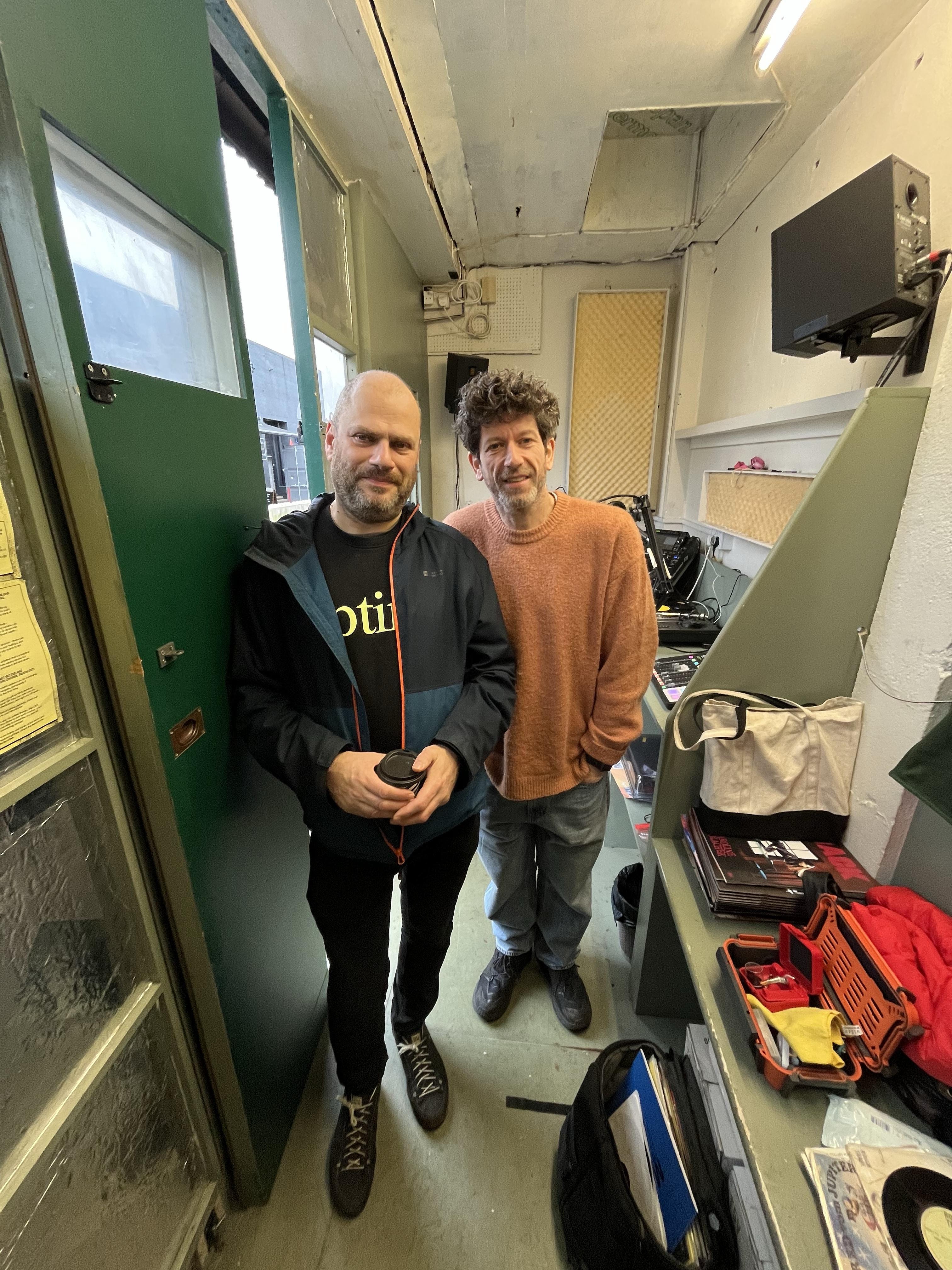
Andrew Thomson
Did you walk here? And you're still keeping up?
Keith McIvor
Yeah. Pretty much. 9.5m which is 15km a day.
AT
So you started walking..
KM
I've always liked walking. But then during the pandemic, just before the pandemic, I was diagnosed as diabetic and I was like told, well, you can reverse it, but no one ever does. And I'm quite kind of bloody minded about it. If I'm going to do something, I'm really gonna do it. So I was like, I'm going to reverse it. I don't want to be diabetic. It killed my grandmother. So just, you know, pandemic and all this time. And I just started walking five miles a day, six miles, and then next thing I was like 12 miles a day, and it just became a force of habit, and I couldn't stop. I literally can't stop. So I cut it back a bit when things go back to normal. And I was like, I'll get down about six, seven, but I can't. It seems like 15km is just what I end up doing every day.
So some of that is just any errand I do, I'll walk, but then I'll also purposely maybe do an hour and a half where I do like 6 or 7 miles. And I have certain routes that I do and I'm like speed walking. So I'm doing it as quick as I can. And it's one of those things where something becomes part of your life and what you do, you just. It's easy. People ask, how do you find the time? I just find the time. And certain things went out the window. Like I spent a lot less time on social media and a lot more time walking. And some days it's a real chore and you're like, oh, the weather's awful, or just you find a way to do it and it's it's great. Not just for my physical health. I'm not diabetic anymore. I've lost lots of weight, I feel healthier. It's great for your mental health as well. It's great for like ideas and working through issues and problems as well.
AT
Not being on social media as well.
KM
I mean, I'm still on a bit, but just cutting that out has been a huge benefit in all sorts of ways.
AT
When you're away, do you keep it up as well?
KM
Yes. Jonnie just finds this hysterical because, like, you have a two hour delay in Heathrow airport or something, and I'm like, ‘right, Jonnie!’ And I'm off walking. If you're in terminal five, there's a train that takes you to the different terminals, but there's actually an underground passage. So I'm just walking up or I'll be walking around Schiphol airport endlessly. So sometimes it's impossible because you're literally traveling all day, but average over the month. I absolutely managed to sustain it. Yeah.
AT
I mean, you seem better for it.
KM
Yeah, I definitely feel better. I mean, I look at photos of myself in 2019 and 18 and I'm like, oh my God, I look so unhealthy. I can really see how unhealthy that I because my lifestyle was pretty. I mean, I did do quite a bit of walking, but generally my lifestyle was just not nearly as healthy.
AT
One of the things I wanted to talk to you about is the idea of how much of a rupture the pandemic has been, because I think in a way we still sort of don't talk about it, even though it effected every part of our lives. We sort of pretend that it hasn't happened.
KM
I mean, people just skirt over it and it's like, oh, that was that weird anomaly. But it was a life changing thing. And I don't know why people are. So I guess people are still processing it really. And it's probably, maybe years down the line where people will really start to accept that it was like a schism in their life. I mean, people talk about pre-war, post-war back in the day, and it really is something as monumental for people that lived through it as that probably was to people that lived back then, but we're just not very good at processing it.
AT
Well, yeah. And even from a music point of view, what's interesting is I think the idea of like back in the day is now the same. It's only back to 2019, I would say Glasgow has changed - probably around the world - but Glasgow feels like it's really changed a lot in that time.
KM
Massively and I really noticed it. One thing I will say, I think there was a lot of utopian thinking during the pandemic about certain things. We’re going to rip it up and start again, which I felt very strongly. And it was also amazing. A lot has changed, but a lot of stuff has just gone back exactly how it was. And it's almost like this opportunity to learn some new lessons. A lot of people didn't take that opportunity, or they just went back to, oh yeah, let's just grab the money. And not a lot of people did and changed everything. And like you said, the scene in Glasgow has definitely changed in ways that wouldn't have happened otherwise. But I think the business techno world just went straight back to business as normal. Yeah.
AT
There's gonna be a lot of people who probably don't even know what Optimo is - or the definition of Optimo to them, is different to what it means to me. Can we get into that for people who might not know why you are these guys who've been around for a long time?
KM
I mean, generations. We've been around. This is 27 years. It's an insane amount of time for anyone to be doing this and still be active. And so obviously it means different things to different people. And also, I mean, I'm so old. I was I'd been DJ’ing for ten years before I started Optimo. So I kind of had this whole journey before that that led up to that. And actually probably wouldn't exist if I hadn't had that journey. And it was a real learning curve, and everything I learned kind of was then chucked out the window. You know, there was a lot of things very, very wrong with club culture back then. And I think I learned everything I didn't like. And Optimo was this kind of, again, utopian thinking, this idea to try and right all the crap stuff in the scene and to do something very idealistic, at least at least initially. I like to think that in some ways it is carried on like that, but we were so militant about what we were not going to be and the things that we did not want this night to be. But we had a lot of experience that taught us how to do that, I think.
AT
You're the one of the club nights that I can think of that brought politics into club culture, like nightclubs and that sort of world. Certainly the time when I was coming up. But now that's so commonplace.
KM
Absolutely. It's almost like a necessity. People still occasionally get angry, and usually it's people who are a bit older and they'll go, oh, dance music's not about politics. Or are they these cliches about peace, love, unity and stuff, but no politics. And as you just said, well, actually, it's always been very political and you just chose to ignore that side of it.
AT
Did you did you feel were you getting that sort of pushback then as well?
KM
I think during the kind of acid house rave era, everything felt just very apathetic. So people would get, for example, they would march about things about the Criminal Justice Bill, things that directly affected their right to maybe go clubbing, but any other issues? It just seemed that they didn't really care about it. Maybe the one exception was the poll tax, and that was interesting. That seemed to galvanize people, but it kind of amazed me how apathetic people were who were in clubbing throughout that period. And I was always someone that had been like active going to marches, demos, trying to do stuff and just felt very frustrated. And people say, oh no, but this isn't escapism. Clubbing is about escaping from, which is also true, and I think go nightclubbing is it's an escape from the whatever terrible things are going on in the world. Having a few hours not to think about that, about if you're in a shitty job. It's escapism. But the overall arch and ethos of it is obviously to me, the opposite of that. It's a platform to galvanize people and talk about these things.
AT
Yeah, yeah, I'd agree with that. What DJ’ing did you do before Optimo?
KM
I kind of fell into it by accident. I never wanted to DJ, never thought about DJing. I was just always someone that was like big into music. All my money went on buying records. So amongst my peer group, I guess I was always the music guy. So if it was a party, we were having a flat party. People said, oh, will you make up tapes? And it started off, I would make up tapes for and that's what you did at a party. Then there was no decks, no one had decks. I didn't know a single person who had had turntables. I used to go to this club night in Edinburgh, and they put up a poster saying that they were looking for people to audition to be the warm up DJ. And my best mate at the time, still a great friend. He goes, oh, we should do this. And I was like, ‘nah, I don't really want to do that’. But he kind of talked me into doing it. And we did it, which is this weird thing where I've always been part of a DJ duo. So even from day one. And we got the job and I'd never used a turntable. I didn't know. I thought the pitch control was the volume. No one was mixing that time. It was just literally playing records. And then I discovered, you know, I really, really like doing this.
AT
Is that Pure you’re talking about?
KM
No, this was before Pure. So this is 1987, in Edinburgh. It was a club called The Back Room. It was kind of like a goth club that also played lots of like electronic music of the era. And it ended because all the people involved with it fell in love with acid house and we all kind of went our separate ways. I was in Glasgow commuting to Edinburgh to do that, and decided I wanted to do some nights here. That didn’t work out. I thought, okay, I've given it a shot, I'm going to go back and finish my university course. I took a year out to kind of try and see if I can make a go of it, and then got invited by this person I knew to start this night in Edinburgh, and his concept was that he would put on like bands, and then after the band you could stay and there would be a club night and this was a night called UFO in Edinburgh, and that was moderately successful and it was kind of the era of Madchester. All the bands wasn't really my taste, but people would stay. The club was kind of dominated by football casuals because it was in the kind of top of Leith Walk. That area was Hibs fans territory. So it was still there in Edinburgh, where they kind of ruled the roost and they kind of took over the night and the night ended because there was one night all of Hearts fans came in. The Hibs fans and the Hearts fans had this massive fight. It was the biggest brawl I've ever seen in my life. Something like from like a wild western movie, tables flying through through the air. Eventually the police came, carted off 100 people. The police station told us, you cannot do this club anymore. It's too dangerous.
So out of that, we kind of went away, thought, okay, again, this is it's all over but our lives. And then the more we thought, we kind of thought, maybe there's a way to do this differently and start again. And so we kind of came up with this idea of making it a members only club. And we went back to Lothian and Borders police, had a discussion with them. If we start this new night and we’re very tight and controlling who's come in with a list of members, can we start it? And they went yes you can. And so we kind of rebranded it as Pure and then started again.
Right? Okay. We're only going to play the music that we want. So it was the best thing that could have happened because the previous night was a bit of a mish mash. It wasn't 100% what we wanted it to be. After we started Pure, we were just we were at the eye of a storm. We were at the right place at the right time as the whole rave thing.
AT
Is this like the early nineties? Was Irvine Welsh around at that point? I feel like the fight scene sounds like something from one of his books
KM
So this is 1990 and yes, so Irvine Welsh was coming. I did not know him. He was a football casual. So he would have been there and that he would have witnessed that. And I love this filtered into his books. I think the book after Trainspotting is called Ecstacy, and there's a scene in that setting set in Pure, and he talks about that. I think he talks about it when he comes to us and an Andrew Weatherall night we put on at Pure.
So Pure almost instantly just exploded. It was insanely popular from the get go. And we were so deeply immersed in that music and the cutting edge of everything. We were the first people in Europe to bring over Jeff Mills. And we paid £200 to Jeff Mills. We paid like £250 for Aphex Twin to play live when no one knew who Aphex Twin was.
AT
This was very pre-internet.
KM
Oh yeah. Absolutely no internet.
AT
How do you get hold of Jeff Mills? Fax machine?
KM
So back then everyone had a fax machine and we didn't have one personally, but we had an office because people that ran the club with us were also concert promoters. So they had a full office with a fax machine, which was a necessity. I was faxing all these artists around the world, trying to connect with them, trying to blag records.
And then, you know, the first Jeff Mills record, we obviously were a huge Underground Resistance fans. The first Jeff Mills records came in and I faxed him direct. Would he come over? And he was like, yeah, I'd love to come over. I think we got him a gig in Leeds as well. So he came over, but like no one knew who he was. People were just like dumbfounded, who is this guy? And he's the most insane DJ anyone has ever seen. And we maintained relations. We probably had him 10 or 15 times. We were really proactive doing this, inviting people like we were the first people in Europe to put Richie Hawtin on - or at least in the UK - and we would have anyone from Detroit, Chicago. We would kind of get them over and try and find them another couple gigs. And then after a few years, there were more booking agencies that we could go to who would bring these people over. And rather than us having to do it directly.
AT
And how connected did you feel? I missed all this, but it felt like an explosion with this new developing sound or scene or whatever. But how small was the scene itself? Did you feel part of something around it? And connected to the other people doing the same thing?
KM
Not really. I think at the beginning we felt we were kind of in isolation. And then as time went on, the rave scene really exploded in Scotland. There was like big raves all around, like in Motherwell and Ingliston. There was a thing called Rezurection. We would start to get booked to play all these things. There was a period of maybe two years where it felt like there was one scene in Scotland, this rave scene. Then very quickly, that changed and it kind of morphed into that rave scene became this very unique Scottish kind of happy hardcore Scott Brown thing. And then suddenly we were doing something different to that and we were playing a different role. But we did get connected to those people in Glasgow doing things similar, and we did feel connected, but initially we thought, we're out there on our own. I mean like Slam, for example. Slam was a very different thing. Slam was kind of like piano house, they kind of came to techno much later. We went to extraordinary lengths to be at the cutting edge of having records that nobody else had.
AT
And I guess maybe more like outside of Scotland, where you was there other people, like I forgot what the name is.. Steve Bicknell’s night (Lost). So was there a connection there?
KM
He hadn't quite started.. There was a famous club in Leeds called The Orbit, which was actually this tiny little village in the middle of nowhere, about 15 miles outside Leeds. We would go and play there. There was a club slightly later in London called Knowledge, and we would play there, but really it was really mainly in Scotland. We were playing all around Scotland and a few places and then over time I mean, it was all word of mouth because that was the only way you would hear anything back then. But it was very sophisticated communication networks going on as well. People were like, ‘how did you find out about music?’ There was like they were called tip sheets, and various people around the world would write these sheets of information and you could subscribe and send a stamped, addressed envelope. So I was communicating with people in New York and Belgium. I would phone up record shops around the country and they would play records down the phone because there was regional variations, with music you could only get in London or Manchester. That seems crazy now that the time of like, play your record down the down the phone.
AT
Yeah. What happens if you didn't like the record?
KM
Well I mean, you've spent half an hour on the phone. Yeah. Yeah. Skip it, skip it. Put the next one on. I was getting sent about 2 or 300 records a week and kind of survived financially because I was very poor by hustling, selling promos.
AT
Interesting. Okay. So how long did Pure run?
KM
So Pure ran from 1990 to 2000. And then about 1997, I was starting to run out of steam with it and probably should have quit then. But out of this kind of sense of loyalty, and also just sometimes you just don't know when to quit. It kept going for another three years. And the reason being, at that point the music had kind of gone to a place. It was technical, but it was very broad in music. We would play house music, all sorts of. It was very wide range of electronic music, and it kind of felt like it was being forced down this very narrow, one dimensional path of hard techno. And the audience that came changed and it was more masculine than it had been, and I wasn't really enjoying it as much. And I'd gone back to listening to all sorts of other music I'd listened to before, the kind of rave thing, and I thought, there must be a way to do a night. What is dance music? Why does dance music have to adhere to these certain rules? Does it even have to be electronic music? And then that's the ideas of doing a completely different night were hovering around my mind. And then the opportunity to do a Sunday night in Glasgow at the Sub Club presented itself and went with it, and I kind of went into it with the same energy. Going into Pure like, this is going to rip up the rule book, I'm going to start fresh, do exactly what I want. And that was Optimo. And with it being a Sunday night, it was slightly easier to do. If people went out on a Friday or Saturday, they probably would have more conservative tastes or expectations. But because it was a Sunday, it changed the type of person that was there. It changed the kind of idea of what it had to be. So obviously to begin with, there was hardly anyone coming anyway. It was a very small coterie of people that were attending.
AT
So how small are we talking?
KM
I mean, like 50 people, 60 people, maybe on a really good night, 100 people. And we were really blessed that the Sub Club. I mean, I remember the first night Mike Grieve of the Sub Club comes up and goes, ‘Wow, that's unlike anything we've ever had here. This is going to be huge’. And Jonnie and I just burst out laughing and went, yeah, right, whatever. But he had the vision and that's what they gave us. I think most clubs, after like six months of having 100 people on max, they probably said, well, you know what? This isn't really working. Let's try something else. But they they believed in it. So we had that longevity, which was also really important because it gave us time to create this thing and experiment and work out exactly what it was.
AT
Just before we move on. How did you meet each other?
KM
So, I didn't really know Jonnie very well. Sometimes we would run buses, which again, seems crazy now. We used to run two coaches from Glasgow through to Edinburgh every week, which over time got less and less and less. But there was a point for about a year and a half where there was about 100 people coming through, and I got to know him from him coming through. And then we had two levels at Pure. There was kind of a downstairs chill out room, we had him play there and then wanted to do more events in Glasgow. He was in the Art School, so we did a few collaboration nights. And then when I started out, actually it was just going to be myself and my idea was it was going to be me and a rotating cast of guest DJs and a pool of DJs in Glasgow that I thought were doing interesting things. But then the first night I asked Jonnie and then there was just something about him that said ‘no, this is it, this is what it's going to be.’ I just kind of knew instantly that this was the perfect dynamic. So that's how we got together, and I think we were like acquaintances when we first started rather than friends.
AT
I mean, that in itself, keeping a maintaining a collaboration that long.
KM
Absolutely. I mean, it's longer than most marriages. You know.
AT
And probably as close..
KM
Yeah. It's very intense relationship. Yeah.
AT
How have you managed? Even the average friendship is hard to maintain.
KM
It is. I mean, there's something magical there. I think we give each other a lot of space. You know, quite often I'll be out at a gig or something and people are like ‘is Jonnie not with you?’ No, he's not, you know, we completely lead separate lives. So I think also, we're both of our strengths and we just - without really talking - we kind of each focused on the area of what needed done each week to run a weekly club. And it's just defined itself that way, that we each have our tasks that we just do. We also decided certain things like, let's not try and make music together. Maybe that would just be too much to put on top of this. I run the labels. Jonnie wasn't too interested in that. So we have side projects that we do that keep our lives apart, but we're very, very close. He's like a brother to me. And I mean, obviously there's been downs, but but I think if anyone knew the number of downs there has been over 27 years, they’d be surprised how few. And you know, we've had 2 or 3 fall outs, but, you know, fixed the next day. So nothing. Nothing drastic.
AT
Yeah. I mean, that's very commendable in of itself. Okay, so the Sub Club. That’s great they had that vision. I guess it does make sense..
KM
I know I mean, I had a relationship with them already. It wasn't like I was a complete stranger. I knew them quite well. I had played at various nights over there. We'd done a few Pure nights in there, so I guess there would be a little bit of faith in what I was trying, but I didn't have any faith in it. I mean, we were just having a laugh. We had no idea of longevity. We had no vision. We were just, let's just do this. It's pure anarchy. Let's rip up the rulebook and have a laugh with our pals.
AT
How did it take to start picking up momentum?
KM
I'd say probably after a year there was this band called Chicks on Speed. We got to know them and a friend of ours was doing press for them and we brought them over and we just like we massively hyped it. We just put all these posters, very cheap posters all around Glasgow and did everything ourselves, very DIY. We put up hundreds and hundreds of these Chicks on Speed and I think people were like ‘What is this? Chicks on Speed?’ It just captured people's imagination. And they played with like 600 people trying to queue to get in, meanwhile, Chicks on Speed are absolutely shambolic. At one point there was a queue to get out at the same time that there was a queue to get in! But I think enough people then came and went ‘Oh man, this Optimo, it's something. There’s something happening here. There's like this energy.’ And from that week on it was 500 people every week without fail for the next 11 years. So it was this definite one point where it was like a collective light bulb went off. We got loads of people who hated it. I mean, especially people that were like house and techno purists. I mean, people like screaming at me. Hey, how can you play Joy Division in the Sub Club? It's sacrilege! Guitars. What?
AT
Just recently we had a party there in July and someone was playing, really fast, like 170bpm. It was divisive and had one of these guys who was just weird screaming FUCK YOU to everyone as he marched his girlfriend out. He just was so angry, I guess it is this sort of sacred place for people.
KM
We would get a lot of that. But that was just fuel the fire and make us even more determined to make this different from anything else that was happening.
AT
And you did do that. Any time I ever try and explain now what that time was like, it's just really hard. You can't. You sound like such an old guy.
KM
I know, I know, absolutely.
AT
But unless you were actually there, you can't really imagine going to a club every Sunday or knowing that you had the option to go every Sunday. Not only that, it was so busy that you used to get given a ticket for like..
KM
For the queue!!
I know. Because we were super militant. Like no queue jumping allowed. And it was also the idea that everything was very egalitarian. So if you were on the guest list, which was tiny, we were famous for having the smallest guest list. But even if you were on the guest list, you still had to queue. There was no queue jumping. It didn't matter who you were. I mean, if Madonna turned up, we'd have made her go to the back of the queue. We were really, really militant about stuff like that.
AT
Cuz it would go right round. I remember you would go to the pub to watch the queue go down before you joined.
That's another special part to me of the Optimo experience. That first hour. Could you talk about that?
KM
So again, that came very early, just this idea that we wanted it to also be, you know, more than a club, to be like a place where people would meet and talk and maybe ideas would happen, collaborations would happen.
So the first hour initially when we first started, because there wasn't enough people coming, we kind of moved all the furniture around the club and half the dance floor had tables and chairs on it, and I guess, where this idea came from. People would sit down and they would start to have conversations and we thought, well, let's keep the music lower so people can talk. So the first hour would be any kind of music we liked, but generally not dance music. Stuff that we maybe thought would be interesting for people to hear or that we loved and we would keep the atmosphere quite quiet.
And sure enough, a lot of people would have conversations, they would meet people and a lot of collaborations, artistic and musical, I think, happened because people had their space where they could have a conversation rather than just walk into this crazy loud club. And then at midnight, it was like kind of BOOM, it would become a dance club, or if we had a live act, we would kind of have like the first hour would be like that. And then at midnight we would have a live band and no matter who played, they got half an hour. And the idea being that if the people hated that live act, it's only half an hour out of their night. They can go outside, have a cigarette, do whatever, but it's not going to spoil their night. And then it would become a dance club and it was fairly full on from then on.
AT
I’m just realising this as you're talking. But when you explain to someone that you would play a Joy Division song or something like that, it’s maybe a bit more acceptable now. We've got used to these as being possibilities, but it's just so hard to try and really explain to someone how different that was at that time.
KM
I mean, it was truly alien. It really, really was. People's minds would be blown. And I think that was when people fell in love with it so much because it was something so completely new and different. But it was also, I think, something that people didn't know they were looking for and then suddenly realised this. Because dance music has peaks and troughs. It was just in a kind of a fairly boring period. And so many of my friends had been clubbers and had just got fed up with going to clubs. They liked going out, but they just didn't like what was happening in clubs at the time.
AT
What was going on in Glasgow at that point?
KM
I mean, there was lots of like big nights at The Arches. There was like Subculture was still going, but just musically, I think like for people that were into music, dance music just felt a little bit stale. It was the era of, you know, Big Beat was breaking. Fatboy Slim was back. It was the year of the Superstar DJ. It just felt a little bit distasteful to anyone that had maybe like a slightly underground aesthetic, and my interest had waned. I wasn't really interested in DJ culture. I was going out to see live music, which is where the band thing came from, because I was really into bands, there was a really vibrant band scene in Glasgow at that time, and then we would start inviting them to come because we couldn’t afford to book any guests.
AT
That's not much of a thing now as well. I guess that was another thing, is that Optimo brought those two scenes together. They were quite divided. The live music scene and the dance.
KM
They were VERY divided. So there was lots of people who were in the live music scene who had never been in a nightclub. I mean, they'd been in an indie club or something, but they'd never been a proper club. And likewise, there were lots of people in the dance scene who had probably never been to a gig, never seen a band. And it was kind of this idea to try and bring those two tribes together. And we did.
AT
It was interesting. Are you still going out to see bands?
KM
All the time. Yeah.
AT
There's always there's always a nice moment when I go to a gig that I'm looking forward to, and end up seeing you there. It adds something to the experience.
KM
So often I know people. I don't really care. I just, I love doing it.
AT
A feel like we are going back to how that was, and these two worlds are slightly drifting apart again, in more bubbles and more like little..
KM
It’s micro. I guess that was the other thing, there was all these like little micro scenes and it feels a little bit like that again. There's all these like micro scenes and there's no like unifying bond perhaps.
AT
Yeah. Yeah. It's interesting that, um.
KM
I mean, that's not necessarily bad.
There's nothing wrong with like micro scenes, but but it's always good if you can bring a large number of people together in some sort of unified experience.
AT
That was a good thing about Optimo, was that you would see all these different social groups and age ranges. You’d see people who are like pretty old..
KM
Absolutely. And, you know, I think also, for example, the gay club scene was very stale at that point in Glasgow, and a lot of people from that scene felt this was like a welcoming space and fully embraced and embraced Optimo because their scene wasn't particularly inspiring.
AT
Yeah, yeah. I remember that. The funny story is that we used to know about Optimo is through Ivan Smagghe. Not because of Glasgow.
I had a friend who studied in Manchester. Used to go to Bugged Out and we got into the Ivan, Kill The DJ thing, and then these guys from Glasgow have done a mix for these people and all of our friend group loved it.
KM
Yeah. That's funny. Yeah, there's quite a lot of people actually who found it through that who lived here, who somehow, had never come across us. And then they were Ivan Smagghe fans.
AT
So how did all that stuff come about? Was it similar to when you were doing Pure and you felt like you were a bit of an outlier. Was that sort of the same with Optimo?
KM
Yeah, we definitely.
I mean, right at the start of 1997, I think we definitely were outliers. But as time went on, I mean, the internet existed in 1997. I wasn't on the internet until maybe 1999. Once we were on the internet, it was a lot easier to make these connections and find out, oh, there's people doing similar. Also word of mouth was probably the main thing. And I think either Ivan or Fany, who ran the Kill the DJ label and the night with him, had somehow heard about us and invited us to come to play in Paris, and it was just one of these instant connections. It was like these two tribes had kind of met each other, and it was love at first sight. Just as people and musically. And we became very regular visitors over there. And then they asked us to do this mix in their series, and that really took it to the next level for us, because that kind of went international and that opened a lot of doors.
AT
You weren’t so well-known outside?
KM
No, I mean outside Scotland. Very limited to the odd gig in London, but very little. We were definitely not even known as touring DJs.
AT
Interesting. And, but then that sort of world where you've got these sort of affiliates, the DFA..
KM
DFA, Robert Johnson in Frankfurt were very close. So they got in touch and they were like, you know, we're huge fans. We'd love you to come and do some stuff with us. And then the DFA thing came about because we got a gig in New York. It was actually this weird thing. It was called Scottish Day or Tartan Day or something, and the Scottish Whatever Tartan Association had us over playing this very weird gig in New York where people were like screaming at us because we wouldn't play The Proclaimers. And we ended up doing this, like side gig at this art gallery that this guy, Douglas Gordon from Glasgow, very famous artist he used to own in New York and Jonnie knew him. We played at his art gallery and someone came up and they handed us this white label of the House of Jealous Lovers by The Rapture. And they said, oh, we think you'll like this. And we brought it back and it just became like a massive hit. This was like months before it actually came out. And then we started to find out the label, got in touch with them and found out The Rapture were going to be in Europe and had them come and play at Optimo before that even had been released. And the sound guy was James Murphy and he goes, oh, I've got my own records coming out soon. I've got a copy. Do you want it? And it was the first LCD Soundsystem. And then he was like, this club is insane. I've got to get you guys to New York. And he had a night and he had us over. And that's how that connection formed, which still remains. We just played this little club in New York that he runs. We were playing another gig in New York. We did a secret gig there. Jonnie’s got an album coming out on DFA. So we've maintained that connection for like decades now.
AT
And Tim Sweeney, that seemed..
KM
So Tim was an intern. He was an intern at DFA, and so he found out about us because he was interning and he was doing this like student radio show Beats in Space, which then nobody really knew what it was. And if we were in New York, which we became regular visitors, I mean, outside of Glasgow, I think New York's the place we've played most, maybe London, but we've played like maybe 100 times in New York. We've had a lot of opportunities to be there, and Tim used to get us to do the show whenever we were there. And again, as Beats in Space gained momentum, that opened us up to like another audience.
AT
You and Jonnie have both been very encouraging to younger people in the scene in Glasgow - myself included - who have benefited from that over the years. But I'm wondering if there's anyone who was like that for both of you?
KM
I guess going way back, the very, very first club that I ever did, where I saw where my friends saw the poster, but they were looking for people to do the warm up, the two guys who ran that club who were probably like ten, 15 years older than me, they were like very inspirational Dance music is great, but you never really think about, wow, this whoever is playing is doing something really amazing. Clubs just were not like that then. These guys were not mixing but it didn't matter. They just knew how to program music. And I think something about what they were doing is in the DNA of Optimo, as in they played a very wide range of music but somehow made it cohesive. So I think they were my mentors in a lot of ways. But beyond that, no, not really. It was all kind of self-discovery. And there was, you know, there was no rulebook. I mean, now you can get DJ workshops. My girlfriend at the time bought me a pair of turntables, and I paid her back £5 a week for a very long time, and it was like a baptism of fire. And I was doing Pure at the time. So I was literally learning on the job. And I'm sure if it was live recordings, I'd be like, absolutely mortified. But people didn't know any different really, so it was a lot more forgiving. But I was literally learning in public and I had to learn myself. How do you do this? I just had to, like, figure it out? I was just so new.
AT
That’s also an interesting thing, is that you're elders now in the Glasgow scene. But maybe people don't realise, is if you are in the first generation of a scene, people like you were on the frontier building something as it was happening. It's not something that you've fallen into, but it's not like ‘how do I get to where they got to?’
KM
Yeah. So there was no roadmap. We didn't know where we were going. And I kept thinking every year I would think, okay, maybe I can do this for another year, but I'll probably have to go and do something else. There's no way I'm going to be able to make a living. But also, I was so poor. I mean, even though Pure was very successful, there was a structure when it first started. The people that ran it who'd had the idea to do it with us were these gig promoters and myself and this guy Andy, and we were the DJs and they kind of promoted it and they said, well, we can either go four ways. On splitting the money, but if we lose money, you need to cough up for any losses. And neither Andy, nor I had any money, so we had to take a wage rather than a split of the profits. So the whole time we were doing it, I was on a very, very low wage and the only reason I survived was because I was hustling and selling all these promos and because there was housing benefit. Housing benefit saved my neck, as did some very generous girlfriends who would feed me. So for ten years I was on way below what it would have been minimum wage. But I just love doing it. And that's why I do it. Because I love doing it. And there was nothing I wanted to do more than to do this.
AT
That's interesting for people to hear that. You’ve been around for so long now, it's a sort of legacy thing. So people just probably assume that it was always like that. I think it's always good to hear those stories where you have struggled as well.
So on that note, do you have a sort of plan to like retire? Not trying to get rid of you! But I'm just wondering from the point of view of you never considering any sort of career and stumbled into it. Is there an endpoint?
KM
I mean. Every year, you know, I live in sheer panic. Will I be able to do this for another year? Will the bookings just end? And especially at this point in my life, I'm like, what else could I do? I mean, I'm pretty much unemployable in any field, so I don't know. I mean, I'm 55 now at the moment. I think if I can do it till I'm 60, that would be amazing. And then I don't know what I'll do.
AT
It's interesting talking to you because I don't think I've spoken to anyone from that generation. But yeah, being the first generation, no one's really retired.
KM
No one's really retired. So I'm kind of at the forefront. You do get DJ’s who retire and then they come back.
AT
James Holden is the only one I can think of who retired on a peak. And he walked away.
KM
And he didn't care! I mean, he obviously hasn't walked away from music, but he did walk away. And it's hard to give it up for a lot of people. I see a lot of my peers that I just know they don't enjoy it anymore. I can tell, but they don't know what else to do. And I admit I don't know what else, but I do still love it. But there's some things I don't love. I've been doing it so long that the travel side of it. I have a family I miss, I have a dog. I miss my dog like when I go also. I mean my hearing is knackered. So that's the main reason why I think if I can do this for 60, because I don't want to be, I mean, quite often, even now, my stepdaughter, half the time she just thinks I'm deaf because she's speaking at me and I'm like blanking her because I just don't hear because of the frequency of her voice. I don't want to be in my 60s and be completely deaf and unable to hear. And then. So maybe if I can get to 60, but I still love it. DJ’ing to an audience who are having a great time is incredibly seductive.
AT
And the other thing is that you've always been successful in over the years is you've been able to sustain and cultivate a new audience. I don't know how intentional that has been, but it just feels like you've always remained.
KM
It's not intentional. I mean, we have this residency we do at the Berkeley Suite, which started after everything opened up after COVID and and I think we probably thought when we started it, it would be a lot of people who had come to our nights over the years and were coming back to relive their past, and we were kind of didn't really want it to be that. We wanted it to be more open. But actually it ended up being completely different to that. And it's this whole new, young, very enthusiastic audience and a handful of people that used to come. But 90% of the people that are coming, is this whole new early 20s audience, which I find quite incredible and very inspiring.
AT
Yeah, that's really cool. In terms of looking for music, there's two parts that I wanted to ask you about. One part to talk about, is what you look for and how for so long, you're always playing new stuff. On the other hand, you have also cultivated a lot of classics. So I'm interested in talking about both those things.
KM
Okay. I spend a lot of time looking for music. And you know, there isn't an Optimo sound, but it's very easy to dismiss things. I instantly know that's not right. That's not right. That's not right. I know what I'm not looking for more than I know what I'm looking for. So I get sent a vast amount of promos and it would take more hours than there are in the week. So I can't go through that. I mean, there's occasionally there's a promo and I do listen to it or it's someone I know has sent me someone I trust. But really, I will go and do a lot of online record shopping. A lot! Whether that be physical or digital. I use Bandcamp a lot. I go down all sorts of wormholes. Also, I play a lot of old music, I have an insanely large record collection and this is a weird thing to say, but I go digging in my own collection and I mean, I'll go on as before. I was pulling out records that I'd I've forgotten existed that I don't even remember having bought. And so I'm always finding these. Wow. That's amazing. How didn't I know? Or I bought it in 1994 and it didn't sound right in 1994 or it didn't quite fit in, but now it sounds fantastic. So I have this huge resource of music old. And I think the way the club culture is now, when I was DJ’ing in 1991, I probably didn't play a single record that was more than six weeks old. Same in 1992. It was such a fast. Everything was new, new, new, new, new. There's still DJs that obviously who play only brand new music, but I think the way I play the music, a lot of it is perhaps timeless. I'm also looking for music that does sound of the future and of the now, but a lot of music and club culture is perhaps we're not at the most innovative point in its cycle. So a lot of these old records actually sound incredible. Quite often people call up, what is that? What is that? And I say, oh, it's this, and it's from 1993. And you can see they're like, wow, it sounds like something that was made released yesterday.
AT
I'm wondering, moving into the classics thing. I think for me, on the Sundays especially, every week I was guaranteed to be running up, going ‘what the fuck is this?’ So much music I've never heard anywhere else moments. But also, I think you're known for playing specific tracks, and I wonder if that's an expectation thing to sort of manage in your head when you're playing?
KM
A little bit. So what I was saying about when we start the Berkeley Suite, and I thought it was going to be this audience that used to come and I thought, then there's going to be this expectation that they want to hear certain records, but that audience doesn't come. So there isn't that expectation. And I think when you're touring as well, I mean, like I tend to play probably far less of what are regarded as Optimo classics. A lot of them I'm very tired of.. Or like ten years later, I haven't played it and I'll suddenly play it and go ‘oh wow, that sounds fresh again.’ But if someone who is a huge Optimo fan that had been there in like 2001 to 2004 came along - and this does happen quite often - they’re disappointed because they're like, ‘oh, you're not playing what I wanted you to play.’ And I go, well, how do you want us to be frozen in aspic or something?
AT
Yeah. I think the last two mixes I've heard in the last few months. Longer ones, the Love International one and I remember some other one that was a whole night recording and full of music that hadn't heard at all.
KM
Then there's other sets where we play, where we were booked to play a festival. We're on a peak energy hour. We've got 90 minutes, and we're probably just banging out, you know, a lot more accessible known music because it's just what you maybe have to do. What is going to work in that moment?
AT
Is there some way of managing the expectation with a set like that, that you have to do your thing? Is there certain tracks that you would have?
KM
Yeah, I think maybe just knowing what works, I enjoy doing that. I enjoy doing both. I enjoy being able to play music that no one's heard of. And I also enjoy being very popular. I like pop music as well. I don't have a problem. There's no divide to me, but sometimes one set will be far more one thing than than the other, and it's very site specific.
AT
Did you enjoy getting up people's nose by having that attitude? I remember hearing Rachel Stevens and stuff like that.
KM
Yeah, absolutely. I mean, people who knew me as a friend would be like, ‘but, you know, you're in all this really weird industrial music. How can you?’ But why can't I like both, why can't I? I do like all that weird industrial music. I like free jazz and improvised music. But I also like pop music, and I like giving people a good time and putting a smile on their face or winding them up. I don't mind winding people. I wouldn't deliberately set out to wind up an audience, but I might want to wind up the people whose heads up their arse.
AT
There’s a bit of the surprise element where you don't know what's coming..
KM
You don't know what's coming. But then that becomes an expectation. People's expectation is, oh, there's going to be something unexpected. And then that becomes this weird pressure. I was expecting something crazy happening or nothing crazy happened. Then it's a disappointment.
AT
Jumping off on a tangent.. but you brought up industrial there, and Regis was meant to come for an interview a few weeks ago. At that point, I was reading that David Keenan book.
KM
England's Hidden Reverse. Yeah.
AT
Oh! Sorry this is a tangent, within tangent. But I noticed you did and a NTS show with a tribute to Silent Servant..
KM
We just did it last week. But then the person in the show after me then did a tribute, and then the show after that was Veronica Vasicka, who did her whole show as a tribute to Silent Servant. But I think it was something that hit a lot of people really hard. I knew him personally just a little bit. I met him a couple times and he was just like, he was just. I mean, when someone dies, people go ‘oh, they were so amazing’. But he really was. He really was one of these mercurial, magical, lovely human beings. But also I loved his music. I was a fan. Yeah.
AT
Absolutely. It was a shock. I don't know if it’s an age thing or something like that or just maybe this world we’re part of, has gotten bigger, so it just feels more common at the moment. I don't know why. I'm getting a sense that it's happening more.
Someone pointed out when Jamie Tiller died, something very interesting is when the way you go on social media to see someone's picture, or you're used to seeing their image. This image is used to tell you that they’re on tour announcing their album or whatever, but you're not expected that news. So your brain isn’t prepared to receive that news and I think it adds to the shock.
KM
Yeah. And I think with Jamie Tiller, there was this image of him with his partner and his kids, and you're just like, Oh My God. You’re broken.
AT
I think it says something interesting about that. This idea of we're not used to processing grief in our wider world.
KM
Absolutely.
AT
I think that's so true of Silent Servant. I only met him very briefly once, but I know he was held in high regard. Anyway, we'll move out of this tangent, and what I wanted to talk to you about, was the transgressive stuff, and that kind of world because I started reading more about it, and I was kind of thinking, of how Whitehouse was tied into the Optimo story.
KM
So, again, Whitehouse was just something that I was really into as a teenager. They were this extreme noise band. But actually, if you listen, there's a slight comedy element. The vocals are like just screaming aggression, and they're quite extreme, but a little bit silly and slightly camp, if you if you know where you're looking. But to other people they just seem like they're extremely horrible. So I discovered that the main guy from Whitehouse lived in Edinburgh. He ran an antique shop, so I got in touch and was like, do you play live? And he was like, yes, we do. Would you come? We do this night in Glasgow. Would you come?
AT
Was this at the same period they were doing their thing or was had they been been doing it and this is now later?
KM
Think they never stopped. I think they started. They just they just kept going. And maybe they had like five years when nothing came out. And then they would have a new album and they would do these live.
AT
From reading this book that suggested that they definitely had a lot of live crazy experiences.
KM
Indeed. And they also had some like crazy fans, which actually led to this insane story that we booked them and they had this fan that obviously had some severe mental health issues and had taken their life's mission was to destroy Whitehouse. I don't know why, but wherever Whitehouse went, there was always trouble with the local police because this fan would phone up the police and tell the police that there was this Nazi band and they were not Nazis. I would never put anyone on that was like a Nazi. They were absolutely not. But this fan was just determined to destroy them. So it ended up I got this phone call and it was the head of Strathclyde Police's whatever branch asking me about. “Oh, we've had complaints about this band that you have playing. Uh, could you tell me, what did you vote for in the last election?” Which I was like, what? I have this funny event.
And eventually I had, a very real conversation with this guy, and he sort of realised, okay, so it's just some, like, extreme act. We deliberately put them on a bank holiday. And so this was kind of a little bit trolling the audience because on a bank holiday you would get a completely different crowd, because by the definition of it being people that wouldn't normally come would come to the club. And quite often those are the people that wouldn't really get it. They'd go because they were they were like kind of awkward tourists we would call them. I mean, it was great that other people did get the opportunity, but you'd also get people that just they were going to come and they were never going to come again. So we deliberately chose this night to put on, and Whitehouse play. And it is extreme noise. And the strangest thing was at the end, after they'd finished, several people came up to me who I would have expected to. People go, what was that? I want my money back. And they were like, wow, I've never seen anything like that in my entire life. I loved it, and we had so much positive feedback that we actually did it again the next bank holiday and had them back and there was no phone call from the from the police at that time, But I think now that would upset people more. People probably get upset and it would then become some sort of social media thing. These lyrics are unacceptable.
AT
I just wonder, when I was reading the book, I was thinking, how would this world play out now ? Because there's so many things that are a sort contradiction. On one hand stuff like queer culture, sex positive, sex worker, there's all this stuff that particularly focuses on that. On the other hand, there's this tabloid nature of social media. So I'm kind of wondering if they would be celebrated now or would they have..
KM
Destroyed. Scandalised..
I mean, I think what I've learned from all that is I don't want to upset people. And I think Whitehouse really did upset some people. And maybe I revelled in it in some naive idea of transgressiveness but I really don't want to upset people. So would I put on Whitehouse now? Maybe I'm more sensitive, thoughtful, but I don't know if I would. I wouldn't put them on now because it's not really right for where we are as a club. But if I was the same.. Yeah, I just don’t know whether now I would do something like that, because I don't want to upset. It doesn't mean I wouldn't want to put something extreme and radical musical, but their lyrics were so.. I mean, people find it upsetting and there's no point upsetting.
AT
What about someone like Coil or Throbbing Gristle, for example, because they, again, are like, people feel a bit like uneasy.
KM
Yeah. I mean, it's funny because they're like sacred to me and especially Coil, but you know, they're in like all this weird occult stuff. And it's weird, everyone assumes because I'm so into them.. but I have zero interest in that. I don't care about the cult, don't care about all the dark stuff. I like nice fluffy things, but I just happen to love their music. Their music does something amazing to me, but I'm not interested in all the baggage attached to it. The shock factor.
AT
Yeah, I think you can like those two things and maybe if you're a bit older..
KM
I mean, there's a lot of artists that that I got into as a result of following them that have made a huge impact in my life. But, you know, Throbbing Gristle would always use Charles Manson imagery and stuff and serial killers, and I don't care about that. It's like, not for me.
AT
This also reminds me of..
KM
Are you going to talk about your Peter Christopherson..
AT
Well I do think about this, because that was pretty close..
KM
That was too extreme, really. I mean, I was like, oh my.
AT
That was pretty close to where we are at now.. It's the first time that I ever came across a thing where people would leave a gig. That was an interesting thing. And it was also interesting that, at the same time as people were leaving and were outraged, there were people who loved it. He sold all his merch in minutes.
And then for me, that music just is just there's that sort of timeless thing. It's just it's just so beautiful. And it does.
KM
Two things could have happened.. If there'd been a tabloid journalist there. And it was just pre cancel culture.
AT
No, but I really think about that a lot. Like what would have happened with that now, because there would be some people who would really defend him, certain parts of the left I'm sure they would really have his back. But then there would be a lot more of a sensitive thing. And just it's so interesting that they both two sides of the same coin.
KM
They are. Absolutely.
AT
There's a contradiction here and I'm finding it at the moment. There's like a sex positive, pro sex worker thing on one hand, but then there's a weird conservative, like, sort of squeamish, judgemental sort of attitude about certain things as well. And it's like the same people, but they contradict each other. I don't know what that is.
KM
But there's plenty of people like who once were friends who were interested in transgressing. But I would have said in the early days of Optimo we'd be like, fuck everything. You know, freedom of speech is everything. Fuck you. We'll do whatever we want, no matter how offensive. And that's what I've learned. Well, I don't want to upset people. And maybe, like, being more sensitive doesn't mean you shouldn't do anything radical or extreme, but there's no point deliberately upsetting people, which is something that we probably did a little bit like some of the video content of stuff that we showed. You know, but but at the same time, you're right about that, that you can't have it both ways with these, like, sex positive. And then they're a bit squeamish about something that they don't like.
I mean, there was like, there's. I don't know if it's still up there. There was some woman who had a huge problem and she's had this, it was a pinned thread on Twitter called Fuck Optimo. And it was there for years. And she was just continually keep adding this list of crimes that we had committed and one that she took particular offense to was this Apocalypse Now..
AT
Oh, yeah. I went to that..
KM
And she was offended because Jonnie and I were cosplaying. We weren't really cosplaying. Well, maybe we were, but I was like, why is that happening? I just couldn't understand why that was. Why are you getting upset? And she went into this big thing with the whole Whitehouse thing and everything. This massive list of crimes. But I thought that was weird to get you upset about the fact that I think I had, like, a GI helmet on or something, and I was with the level of cosplay.
AT
I think that's another thing. It seems to me like people don’t seem to be having much fun.
KM
People go, why did you do that? Why did you do that? Because it was..
BOTH
Fun!
KM
It was fun for us. Because it was fun. Yeah. It's funny. You can still be a serious person and have fun at the same time.
AT
Another thing I wanted to ask about, was the person that had been getting messages about you. You were talking about, like a fan?
KM
Oh, so this was back in the Pure days. And I guess I'm quite sensitive to people who may be in distress. I can usually sense in a room if someone's having a really bad time or something. There was this guy who was at Pure, and I could just tell he was having a really bad time. So I went over and asked if he was okay and he wasn't. And I managed to calm him down. And because he completely latched onto me after I was suddenly his hero. It turned out he had like some very severe. He was diagnosed as schizophrenic, and from that period on he started mailing me letters every day. He would send me like a 20 page letter, and he was convinced that I was either the reincarnation of Adolf Hitler Charming or Aleister Crowley. And he sent me this full Aleister Crowley biography. And he had gone through the book, and he had scored out every time Aleister Crowley's name was mentioned and put my name in. And I think I released this album at the time, this compilation album and the person did the artwork, unbeknownst to me, had used some occult imagery in the artwork. So he then thought that I was some massive occult person and I was trying to send him messages. Anyway, this went on for years. He would send that he stopped coming to the club, and then he tried to burn down a convent and was sectioned and was in a psychiatric hospital. He kept sending me the letters, and my flatmate at the time was absolutely terrified. She was like, this guy knows where we live. These letters are absolutely insane. There was like pentagrams, all this cult or cult stuff. And this went on for several years and I moved house, didn't redirect my mail. And, um, so the letters stopped coming.
And about 5 or 6 years later, I was doing a gig at the venue in Edinburgh where we used to do Pure just before it closed, and the owner of the club went, oh, we still can't get all these letters for you every week. So this was like ten years later, this guy was still sending.. I don't know, whatever happened. I presume he's still in a psychiatric hospital. But I learned something from that. It really shut me down because I used to be much more empathetic. If someone looked like they were in distress, I would try and, like, see if they were okay. And it kind of made me scared to do that a little bit. And I think it shut down something in me because I had such a negative experience from trying to reach out to someone.
AT
Yeah, that's an interesting thing. I'm just thinking that now would just be a troll on the internet.
KM
And you would just block them. There was no block in there. I had to move house!
AT
I don’t think this was the story I was thinking about. There was another one..
KM
Ohh. Yeah, this is quite sad. I played in San Francisco a few times for this friend of mine. One of her best friends had, like, really fallen in love with Optimo. She became a big fan, and and she was doing a tour of Europe, and she got to Barcelona, and then she was coming to Glasgow, and I think she'd been in Barcelona, and she'd take a whole load of acid and had a psychotic episode and came to Glasgow and turned up. I didn't know she was coming to him, but I knew her from San Francisco and she was like, I need to speak to, I need to speak, I need to speak to you. And I was like, ‘okay, the minute I come off from DJ’ing’ and I came, I've got a message for you. It's from Sun-Ra. I need to tell you this. She wouldn't tell me what the message was. She kept going. And this went on for about half an hour. And I was like, all right, I need to go back on now. Don't leave the club. Because I obviously knew that she was having some sort of episode. So I finished and she did leave the club, ended up something really horrific happened to her. She was sectioned in Glasgow and the psychiatric hospital called me and I used to go and it took like I think about a week to ten days for her mum to be able to come and take her back to San Francisco. And I used to go and visit her, and that was quite distressing. And, she's fine now. She she's totally recovered. And I never found out what Sun-Ra I wanted to tell me!
I did message her one time, and I didn't really want to go down the route of - ‘I’m just checking if you’re okay.? ps. What did Sun-Ra say?’
Okay. Speaking of Sun-Ra.. So you’ve kinda explained it, but you have this deep knowledge about different kinds of music. Is there some sort of explanation for that? What was the music at home like when you were a kid?
KM
You know, it was very much non-musical. I mean, there was music on, but it was like, very, very middle of the road. My parents are very conservative. I don't think I liked music until I was maybe ten, because it would just be like Radio 2. And then I think I got a transistor radio for my 10th birthday and went, ‘oh wow, there's other music’. I mean, obviously I'd heard other music in the world, but I just wasn't particularly into music because my parents had made me think it was just.. And then I guess, my thing was music. I was like, I was 10 or 11 looking for something and music filled, whatever that was. And I became obsessed and have never stopped being being obsessed. But I always just want to hear everything. Sometimes I hear people say 'I'm bored with music’. How can you be bored?? There's like 100 years of recorded music from every corner of the planet and part of me just wants to hear it all. Which is an impossible task.
AT
I heard Trevor Jackson say there isn’t any excuse for a DJ to be playing the same music as anyone else, because there really isn't, you can find anything.
KM
Yeah, you can.I mean, I was just looking on Juno yesterday and there was like this compilation of Sardinian wave music from 1982. I mean, that's pretty niche. And it was sold out as well. That's a really niche genre!
AT
What do you make of that? Going back to the sort of Optimo first hour. That would be the only time I would hear some of this, like much more unusual music.. But that has sort of taken a life of its own. Like, that's really seem like you get these huge reissue labels doing like thousands and thousands of records.
KM
Absolutely. You get DJs that are suddenly they're selectors now. I mean, I think that's a bit pretentious, really. The whole ‘I'm a selector rather than a DJ’. I mean, I know what it means. And a lot of those people, they've introduced me to some really great music, but I would not like to be called a selector. I know we have played Dekmantel Selectors and then probably deliberately played a very populist set and it went off. So you kind of think, well, you know what? There's room for both! But I'm all about discovering music. And obviously I get introduced to lots of amazing music that I wouldn't have otherwise known for via that kind of world.
AT
Yeah. I mean, I feel like even in the time that me and Brian done Highlife, that’s just something that felt so new and it was so different and it was like bringing people from other parts of the world to Glasgow. But even explaining that to someone now, it just feels like it's just like so..
KM
So what? I know.
But you'll meet someone that knows everything about every record that was released in Brazil in in the south of Brazil in 1973. And they've heard it all and they've never heard of Pink Floyd, or which doesn't matter, why should they? But I kind of find that funny, that their knowledge sometimes is so very, very niche. Whereas I kind of I do want to know about everything, whether it be the genre or the mainstream as well.
AT
Fergus comes to mind..
KM
Fergus. Exactly who I'm thinking of here. No offense to Fergus, who is amazing.
AT
What I like about Fergus. And maybe, DJ Michael is they are at the start of a new thing, which is interesting to me. That you have grown up on the internet and everything is at your disposal. So you can be like deeply knowledgable about things from a pretty young age. It is there for you find if you've got the curiosity to go and find it. I’m interested in see what music will be made by this generation as a result of this access..
So another thing we talked about was about the sort of Optimo playing style. I think when we spoke before, you mentioned a Glasgow style. What is that?
KM
Well, I think it's both an Optimo style and a Glasgow style. I think the Glasgow style is because we had short club hours..
AT
So Optimo fed into that?
KM
Well, I think then even more so because we would have this first hour where we were not playing anything really you could dance to. And then quite often we would have a live act. So actually that only gave us 2.5 hours. So it was maybe even more condensed. And I think I maybe Jonnie was more drawn out, whereas I just had so many things that I wanted to play and was so excited to play them that it became almost too frantic and there was maybe too much was crammed in. But I still noticed when you know, someone like DJ Sprinkles probably plays like three records an hour, and I'm probably playing like 20 records an hour, and I just can't. I mean, I love that. I wish I had the patience to play a 18 minute record or something. I just don't have that patience because I've had so many years of playing in a different way.
AT
What was it like when you started to play outside of Glasgow?
KM
Yeah. So that was really hard at first because we were so used to this style of DJing. And I remember I think the first time we played Panorama Bar and this German guy comes up and goes, ‘Ja. It's really interesting. But you guys, you, you need to be more boring’. And I knew exactly what he meant. I mean, he was just like ‘hey, slow down a bit. Pace yourself. Here, we go all night’. And that was kind of having to relearn. So you kind of DJ in different ways in different places.
AT
And do you find that's still a thing when you're away or you kind of got the hang of it?
KM
Yeah, kind of got the hang of it. Yeah. I mean, it depends. And also I like the hours in Glasgow are slightly longer now.
AT
I do wonder what Glasgow would be like with much longer hours.
KM
I think it would be totally different. I mean, the scene would be completely different. I think there was a lot of pluses to it. I don't know if I would like it. Definitely at this age, I wouldn't like to be playing at nine in the morning in Glasgow every weekend or something.
AT
Alright I think we did it! Well, I guess, 25 years of Optimo now.
KM
Well 27, actually. But with the 25 year compilation, it took two years to license, so it's actually late. So we're kind of having to pretend it's our 25th again! Yeah. You had Covid years so actually yeah yeah yeah we'll deduct that.
AT
What's the story with the comp?
KM
So this company Above Board, I've got a long relationship with their distributor and label. And the guy that owns it is also an Optimo fan. So it was his idea when he found out it was going to be our 25th birthday, they'd done like a whole different series of. They did like, a DJ Harvey compilation in a similar way where they did it across two volumes. They did a Fabio & Grooverider one, and he was like, would you like to to do one? And we jumped at the chance but I didn’t want it to be Optimo as a Greatest Hits for for lots of reasons. One, it just wasn't very interesting to us. And two - we talked about this a little bit before - What is the greatest hits? If you came in 1997, your greatest hits would be different to people that came in 2004 or whatever. So the idea was, it would just it would reflect what the night at Optimo might be. And the side one of the record is all representative of music that might have been played in the first hour, for example. And it's just a selection of we have this huge, huge list of like 100 tracks. And then that got whittled down and then it was what we were able to to license. But I think it's a cohesive kind of reflection of what might get played at an Optimo night.
AT
Optimo right now? Or both?
KM
Yeah. Any point in history. Yeah, yeah.
AT
I do wonder on that note.. What if someone asks you, what do you do? Is there a certain answer? Because as Optimo you’re a party promoter..
KM
I mean, if I get asked, for example by my taxi driver, I make something up. I just hate saying I'm a DJ because then they instantly have all these ideas. I say work in music, and then they ask, what do you do in music? So, for example, if I'm going in to United States and last week and the immigration was, what is it you do? And I said, I work in music. And then if he says, what do you go? Well, I run a label, I release music, and then usually the DJ part will come and be the very last thing I will want to say that I, that I do.
AT
Is that how you consider yourself as well? Like just from the point of view, obviously the DJ’ing factor is a huge aspect to it. But promoting has changed. It's really a skillset that you actually have to be up to date with as, as times change. I mean, when I started, when that was the Myspace years.
KM
Yeah. So now you have to be a social media guru. And also like we produce. Remix.
AT
Is there anything happening with the label?
KM
That's going to stop this year. Well it's going to pause. So this year is the 15th year of running the label. I think most people would probably make a big deal of it and then try and milk that. I want to do the opposite. I just thought it's time to maybe do something a little bit different. Uh, so there's still quite a lot of releases to come out. So this year there will be a lot releases. But then, just by serendipity, a couple of bands came out. We got in touch about working together, and I started to think about it. That bands has always been a huge thing in my life, but the label maybe hasn't really reflected that. So I'm going to work with a couple bands this year, and one in particular is this Glasgow band who musically, when they emailed, I was like, no, I could just tell from the email that this is not the right thing for Optimo. But then I went and listened to their songs and it was the best songwriting I'd heard in ages and I thought, you know what? I want to, as a challenge to me, to keep life interesting. I want to maybe help develop this band. So it's going to be I will release them on this new sublabel called Optimo Music Rocks, because it's kind of rock music.
AT
Help with the label side of things or sound wise as well?
KM
No, I mean, they have they have absolutely nailed it. This band is a complete, they have a total vision of their sound and the songwriting and everything. They just don't know how to reach it, to take it to the world. Not that I necessarily do. So what I want to do is maybe help them to get to a point where they can sign to a larger label who can take them to the world, because I think they could be playing stadiums around the world. I think that as an individual. But it's just it's a challenge. I've got to keep life interesting for myself as well as, you know, making a living.
AT
So yeah, I was saying you come with this other knowledge that's sort of useless in any other way. You can do things with it.
KM
Yeah, absolutely. And I know a lot of people and have a lot of contacts and I mean, maybe nothing. Maybe they'll end up never leaving Glasgow, but yeah, yeah, yeah.
AT
Yeah. All right. Well, that sounds like a good way to finish! Thank you for your time.
KM
Oh, thanks for having me.
Great interview ! Did you ever find out the name of the band he was going to work with ?
Great read. Thanks for sharing